
Many of us grew up with a history that was half told. Slavery cut through our family lines: names nobody said out loud, stories that stopped a generation back. With AI as an accelerator for deep research, Sin Miedu helps you find the missing pieces and make something new with them. When you know where you come from, the fears that hold you back lose their grip.
For everyone already on the journey of finding out who they are.
Rooted in one of the islands, whether you grew up there or in the diaspora.
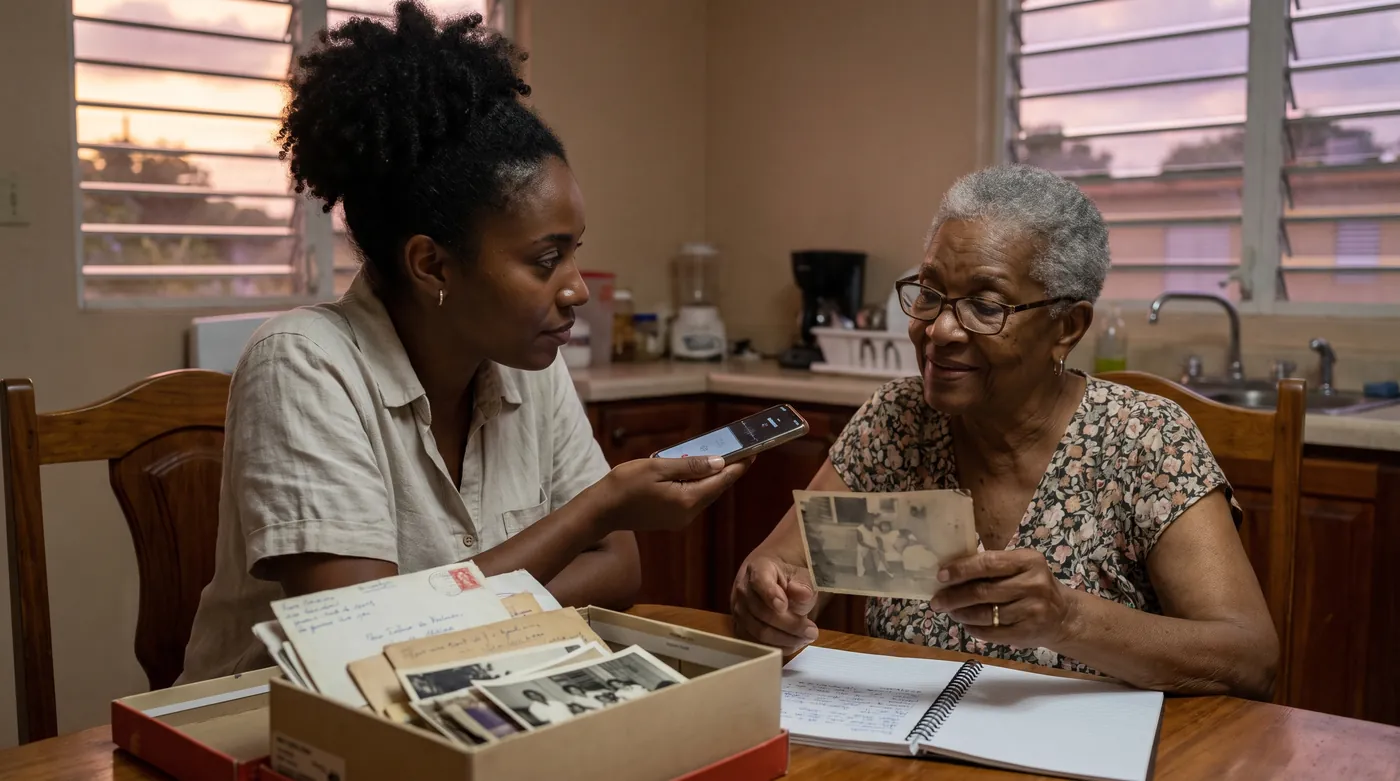
Find the missing pieces
Trace your family through interviews, archives and records, back to the time of slavery and emancipation.
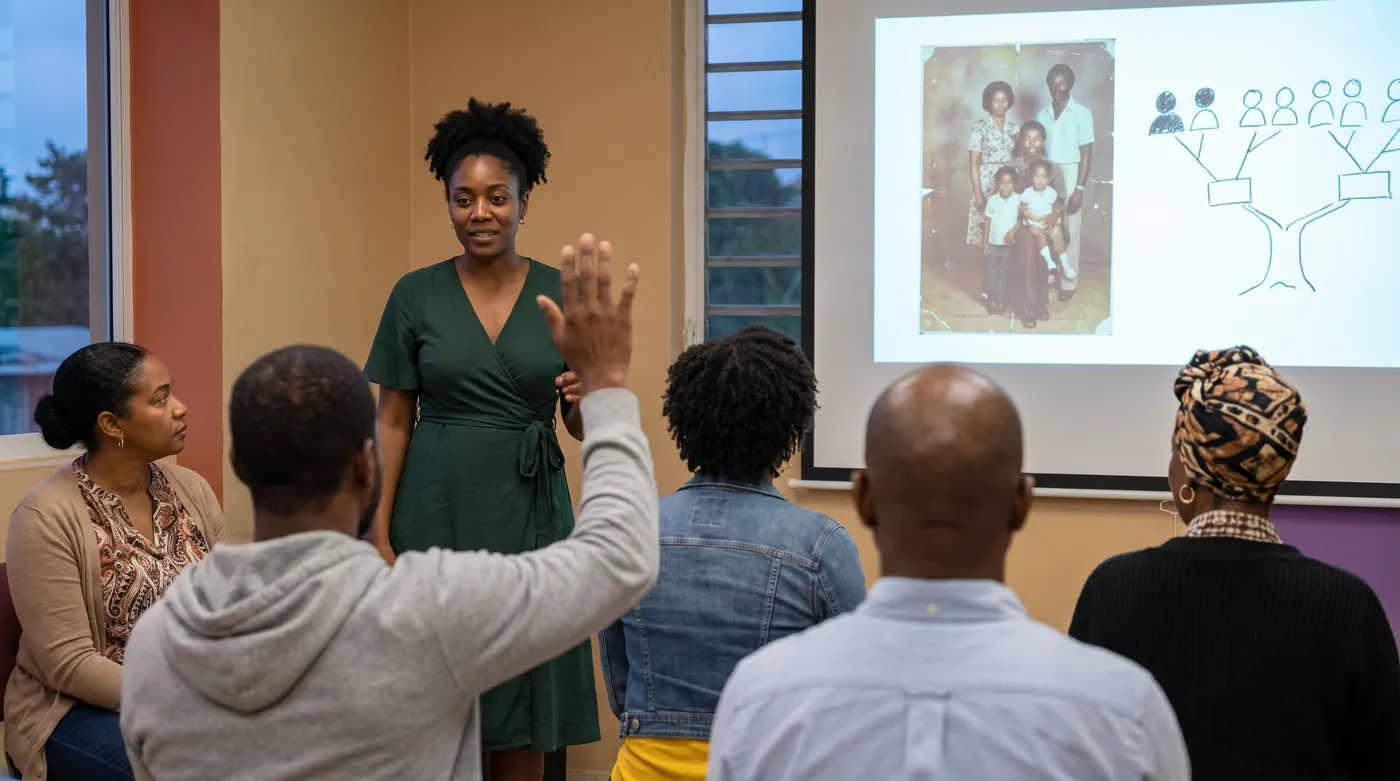
Find your voice
Turn what you find into your own story, told in your own words and your own form.

Find your place
Discover the strength your lineage gave you, and what you are here to bring to the community.
Storytelling, technology and AI augment the process. They never replace the conversation with your elders, or the person doing the remembering.
Sin Miedu Roots. AI that reads the archives alongside you.
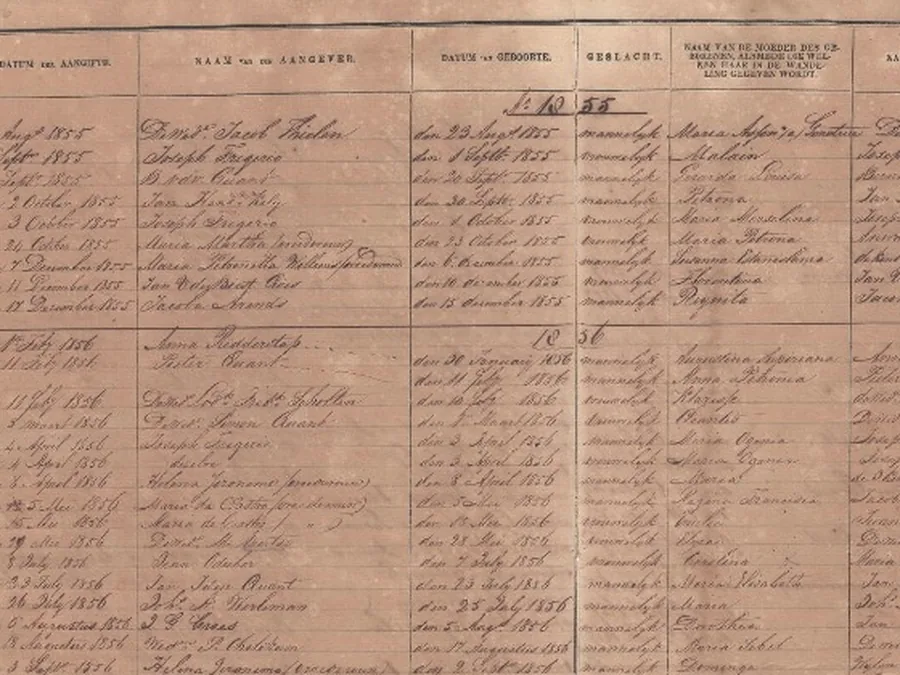
Not just a family tree. Roots searches real archives, from the slave registers and the emancipation registers of 1863 to old island newspapers, reads the pages for you and brings back what might belong to your family. You decide what is true.
AI reads the archives so you don't have to search page by page.
Roots is connected to the Nationaal Archief and Open Archieven, and to newspapers and magazines from the islands. AI reads printed pages and old handwriting that is hard for us to read, compares names, dates and places across sources, and spots the patterns that point to your family.
Deep search RUNNING
- Nationaal Archief indexes
12 records compared - Open Archieven
31 records compared - Island newspapers and magazines
9 printed pages read - Handwritten registers
Reading line by line…
Every search ends with a list of trails you can follow yourself.
Some answers aren't online. They're with an aunt, in a church book or in a box of letters. Roots turns every search into a to-do list: who to ask, which finds to review and which archive to visit, with an idea of how long each trail will take.
Trails to follow 24 OPEN
Keep going until you reach past 1863.
Every ancestor you find pushes the bar further back in time. The goal is to get past 1 July 1863, the day slavery was abolished in Suriname and the Caribbean parts of the Kingdom. That is the threshold we work towards together.
Past 1863
Your family stays yours. Nothing is shared with other participants without your consent, and you can export or delete your data at any time.
Three stages. Each one takes something away.
Sin Miedu means without fear. The history of slavery left masks, silences and fears in our families. Every stage of the workshop takes one of them away, and what is left is fuller, not emptier.
Who am I?
We begin with what already lives in you: music, language, the stories told at the kitchen table. Then you start your research and prepare to talk with your family.
Where do I come from?
You share what surfaced, stand in your own lineage, and learn to read the archive. Then you choose what you will make.
Who am I becoming?
You finish your story, share it with the group, and step forward with a clearer sense of what you bring to the community.
Between the days you work at home: family interviews, your own archive research, and your web experience. Each time, an online office hour keeps you on track.
Your family's story, as a web experience you scroll through.
On Day 3 your research becomes an animated, interactive web experience. Everything you found in Sin Miedu Roots goes into it, you answer a few questions and choose your colours, and the system builds a story about your ancestors that unfolds as you scroll: chapter by chapter, generation after generation. You can share it with your family, and together every story becomes part of a living archive.
Finally, her own name
Juana, about fourteen, is entered in the emancipation register of Curaçao. For the first time, the register calls her free.
A name of his own
Her son Isidoro is baptised in Willemstad. The register gives him a surname: Pietersz.
Work, smoke, a future
Lodewijk goes to work at the refinery. Twenty-five years later a company magazine thanks him by name.
And then you.
Four generations later, the story comes back to you. Keep scrolling: the next chapter is yours.
An example with an invented family. Yours is built from your own research.
AI helps. A human decides.
AI can open doors that stayed closed for a long time: slave registers and emancipation registers that are hard to search, handwriting that is hard to read, sources scattered across countries and languages.
But your ancestors are not data to be processed. In everything we do with AI, a human stays in the loop, checking, correcting and deciding what is true and what gets told.
Who guides you.

David van Delden
Born and raised in Curaçao, David has spent more than fifteen years in innovation, design and technology, and now AI. He knows how our relationship with AI works, and what freedom it can give: for him, it has become a way to focus on the core of the work and to understand himself better. He built the research tools behind this workshop.

Kunta Rincho
Kunta specialises in the history of slavery, colonialism, anti-racism and empowerment, with more than ten years in education and youth care. Through Tambú and Seú he lets people feel how rhythm, culture and resistance come together. He carries the living archive of music and spoken word through all three days.
kuntarincho.nl
Lizzy Zwiers
Lizzy is a systemic coach and constellation facilitator with more than fifteen years of experience guiding people and teams. On Day 2 she leads the systemic work: a guided way to stand in your own lineage and feel what it asks of you.
lizzyzwiers.comWhat you get when you join.
One fee covers the whole programme: the three days, the tools and the time in between.
Roots · Voice · Legacy
Three workshop days between November and January, with time in between to research, interview and make.
- Three workshop days with the facilitators
- Lunch on every workshop day and dinner on the last day
- An account on Sin Miedu Roots, an AI genealogy tool for researching your Caribbean ancestry
- AI credits for the AI tools you use
- An introduction to AI and how to use it for research
- An animated, interactive web experience of your family's story
Ready to find the rest of your story?
Sign up online. Not sure whether this workshop is right for you? Email us at info@sinmiedu.org and we'll reply personally.
Sign up online