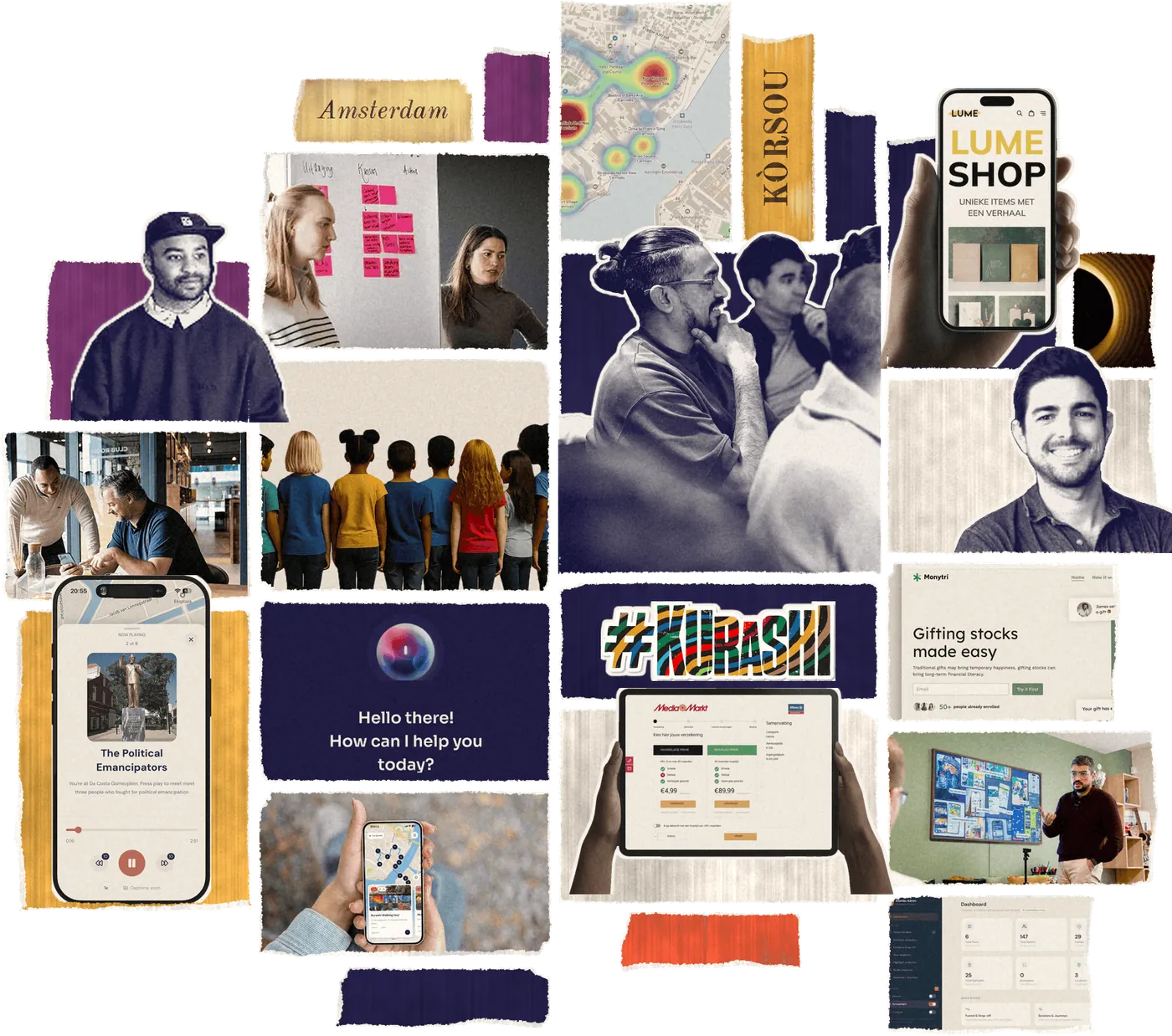
Pick up the pieces. Find the whole story.
Sin Miedu helps people with Dutch Caribbean roots uncover their family history and put it back together through storytelling, technology, workshops and personal leadership. Much of that history was never told. We help you find it, understand it, and make something new with it.
See the first workshopSin Miedu is a foundation with Caribbean roots, started by the studio Ngrane in Amsterdam. Our first programme starts in November 2026.
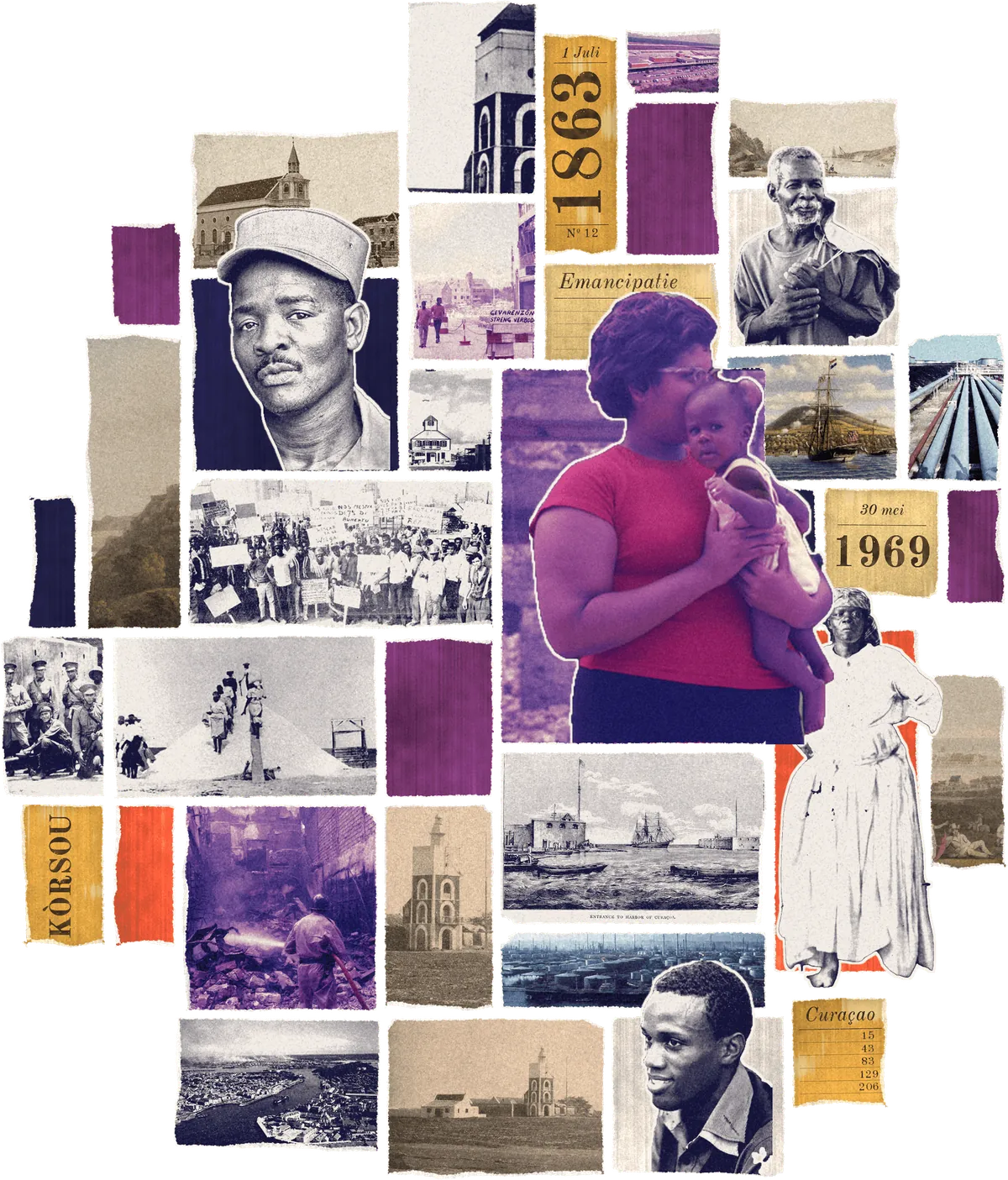
What we do. Four ways.
Many of us grew up with a history that was half told. Sin Miedu helps people from the Dutch Caribbean diaspora find the missing pieces, understand them, and make something new with them. We work with archives and new technology, with facilitators and coaches, and with each other.
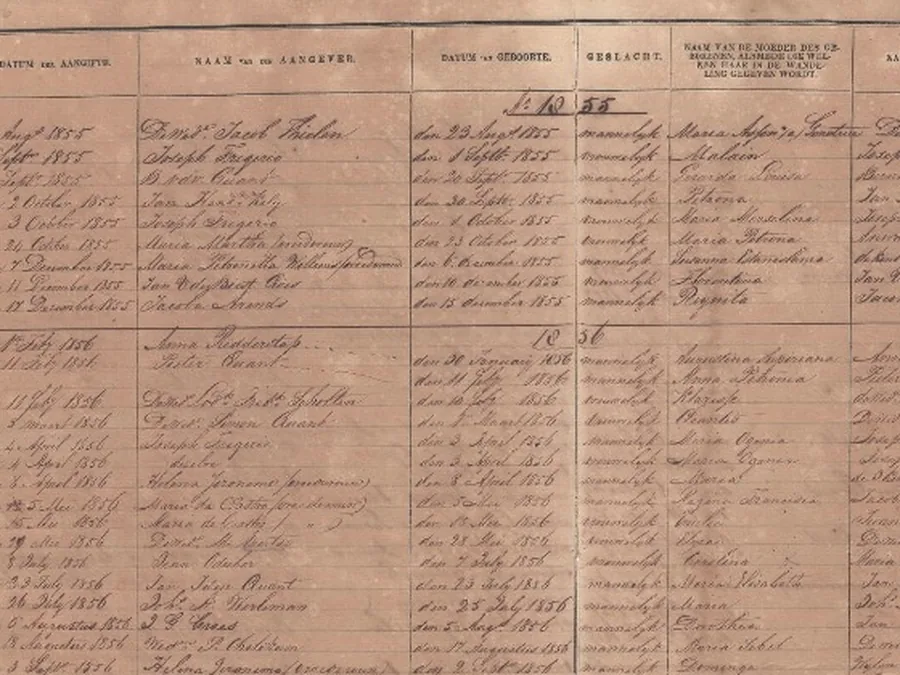
Educate
Open up the history of the six islands and their people (the documents, the languages, the names) so that it can be found and understood.
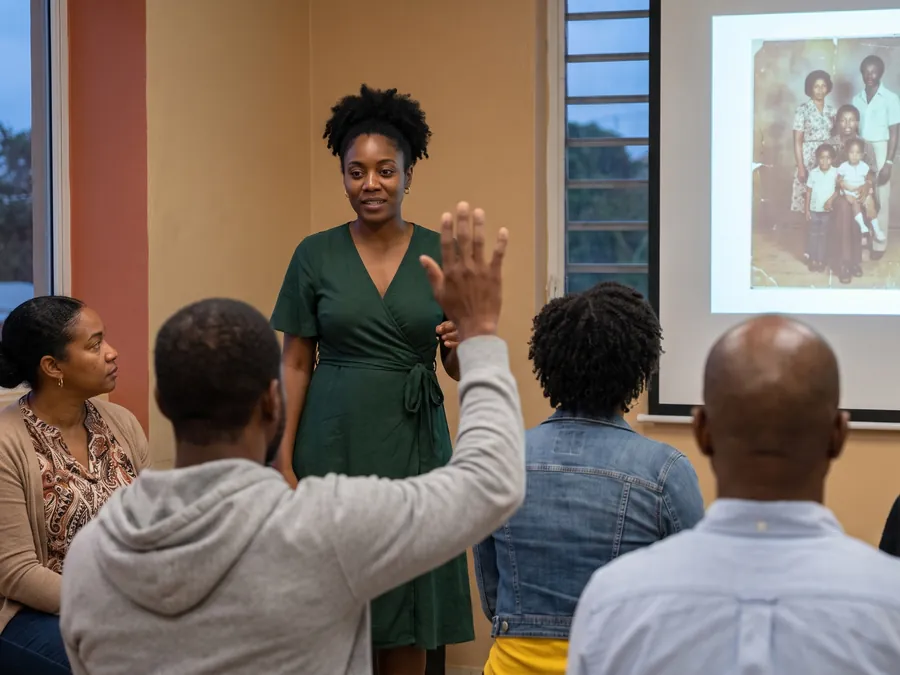
Empower
Healing, coaching and personal leadership, so that carrying a heavy history becomes a source of strength instead of silence.
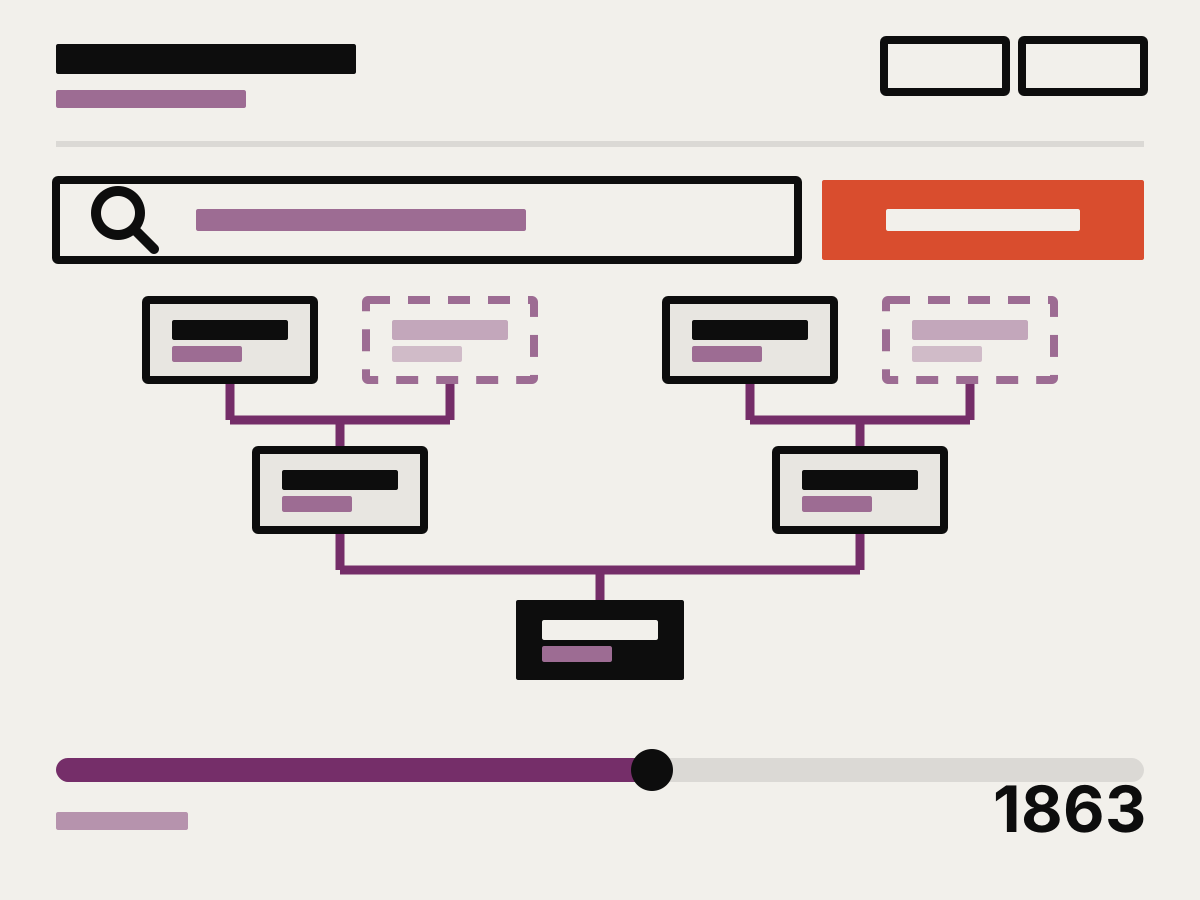
Innovate
Tools that make research and storytelling possible for everyone: AI-assisted archive search, image and film, a living digital archive.
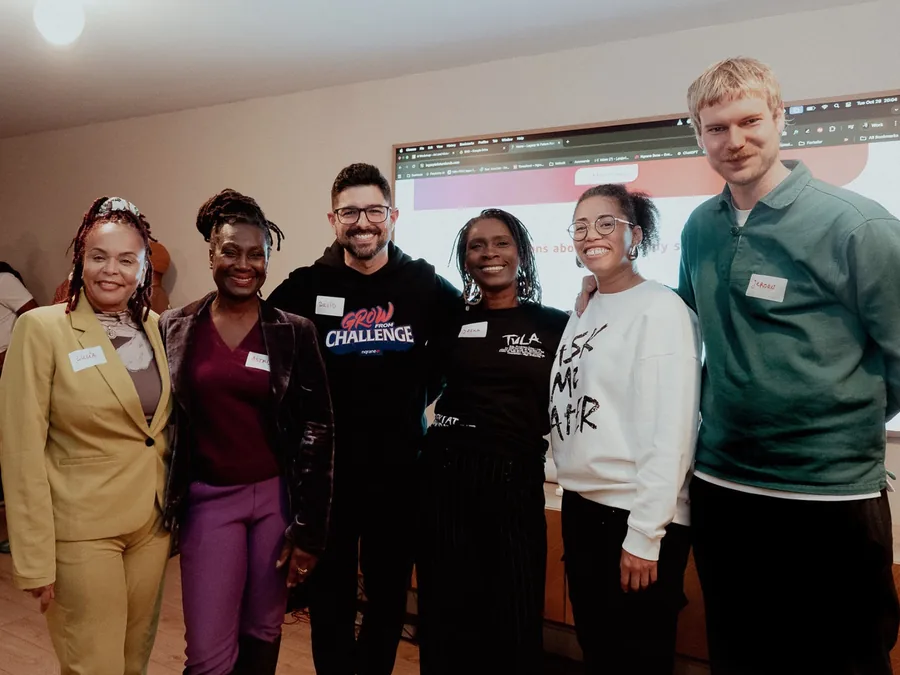
Connect
Bring people together across families, islands, generations and the ocean between the Caribbean and the Netherlands.
We live between
The islands are places where opposite things sit side by side and both are true. Our work does not choose one. It holds both.
- Past and future become legacy: knowing where you come from so you can build for those after you.
- Pain and resilience become healing: the pain isn't erased; it becomes part of what makes you whole.
- Individual and community become autonomy: finding the function only you can serve within it.
- Fear and courage become voice: courage isn't the absence of fear; it's speaking while the fear is still there.
- Local and worldwide become Creole: local and global mixed into something new that belongs to neither alone.
Picking up the pieces
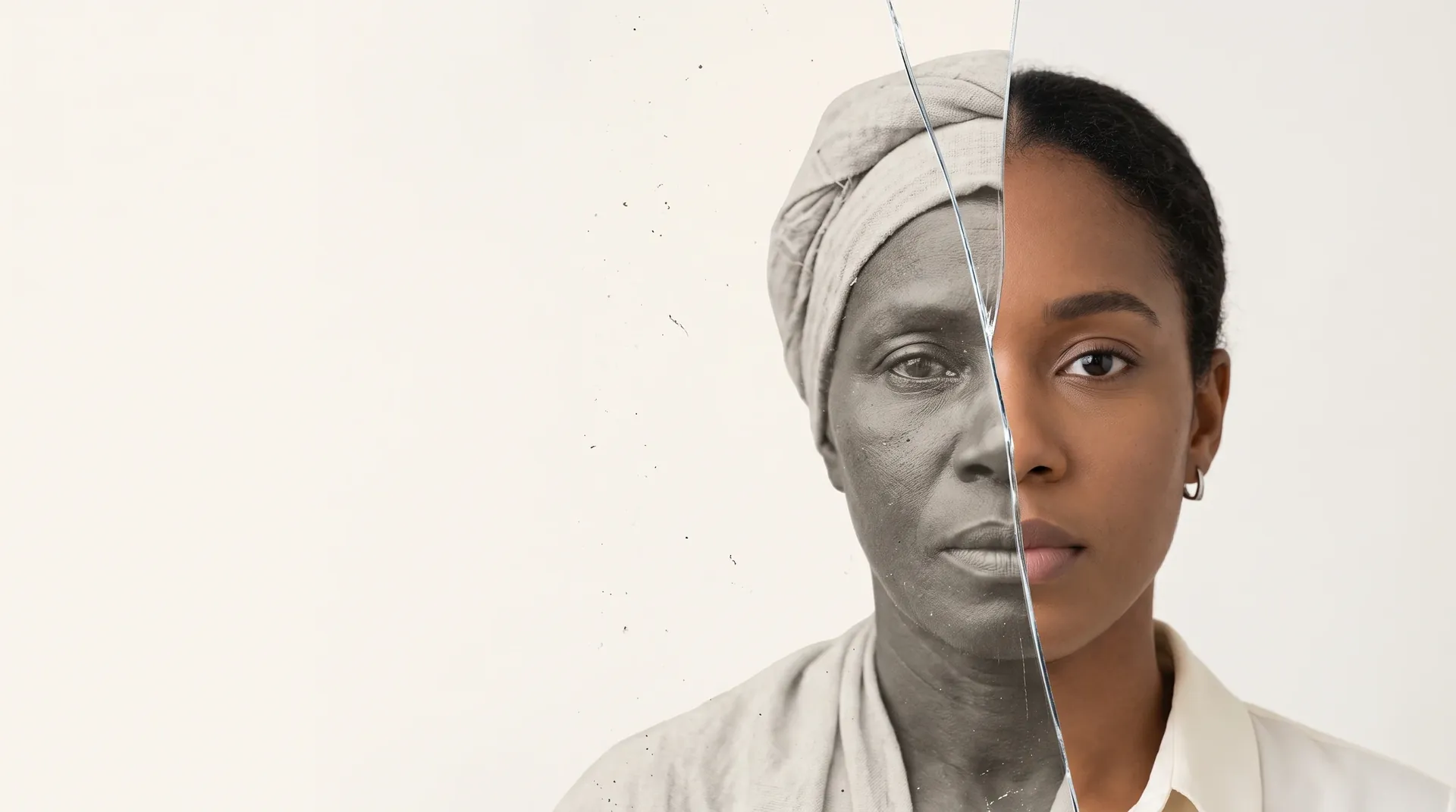
Our past is not one broken vase. It is many: Indigenous, African, Sephardic, European, Latin American. All of it fused into the people and the languages of the islands. Each of those vases was broken at some point, and the pieces were scattered across families, six islands and two continents.
Sin Miedu picks those pieces up and glues them back together. In the Japanese craft of kintsugi, a broken bowl is repaired with gold so that the cracks become the most beautiful part. That is how we look at our history: the fractures are not hidden. They show, and they are ours.
What comes out of the repair is not the old vase. It is something new, made of everything we were.
Read the article (opens in a new tab)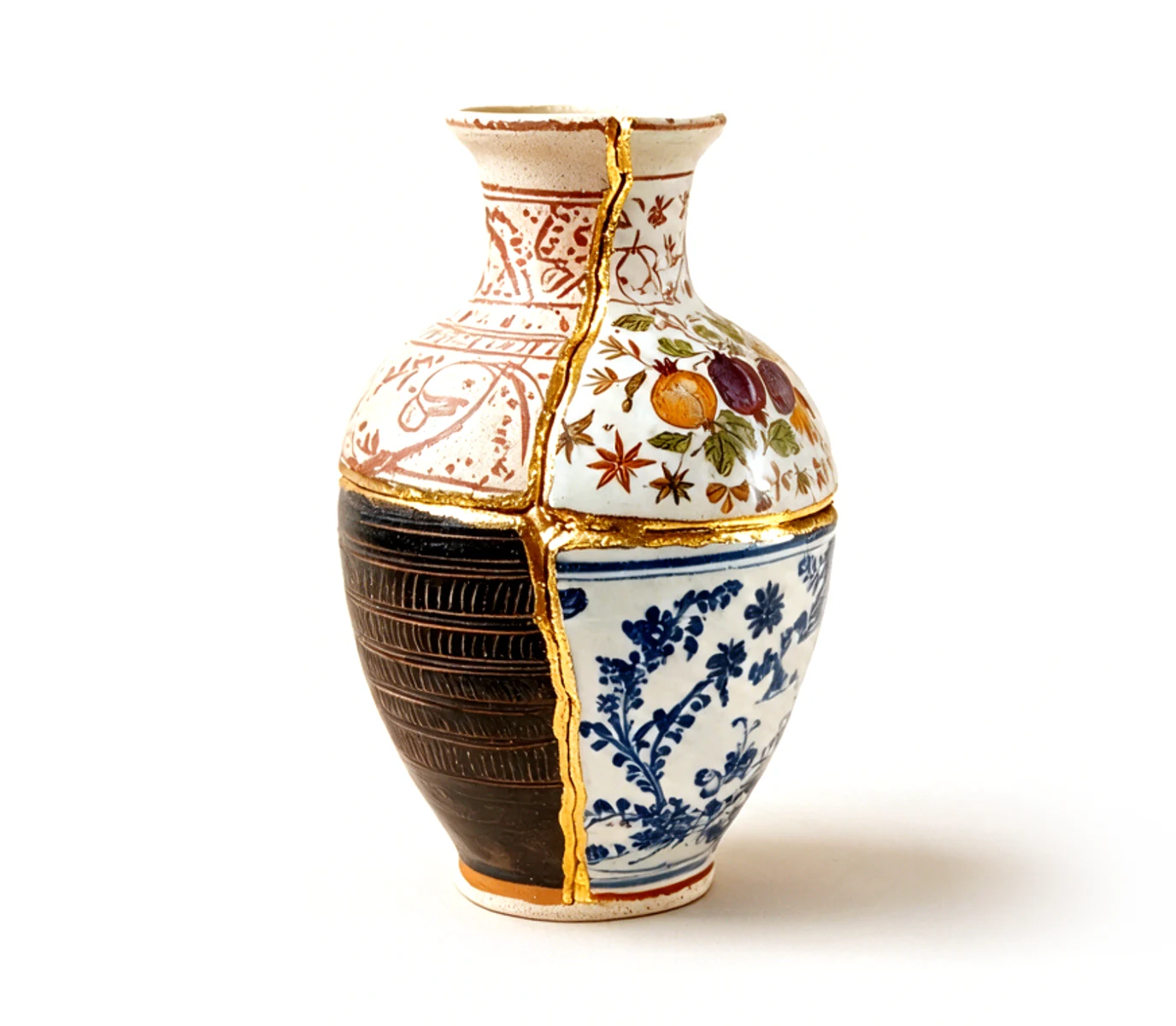
Sin means without. Miedu means fear. The name is Papiamentu, the language of Aruba, Bonaire and Curaçao, spelled with a u the Curaçao way, and it is meant for all six islands.
The fear we mean is not a lack of courage. It is what a hard history leaves behind: not knowing what the records will say, not wanting to reopen what a grandmother closed, not feeling fully at home on either side of the ocean. Sin Miedu means we are allowed to look. Set that fear aside, gently, and what remains is the whole story, and the people who are ready to tell it.
Our logo is designed as a mosaic: one word made of many letterforms, glued together with visible seams.
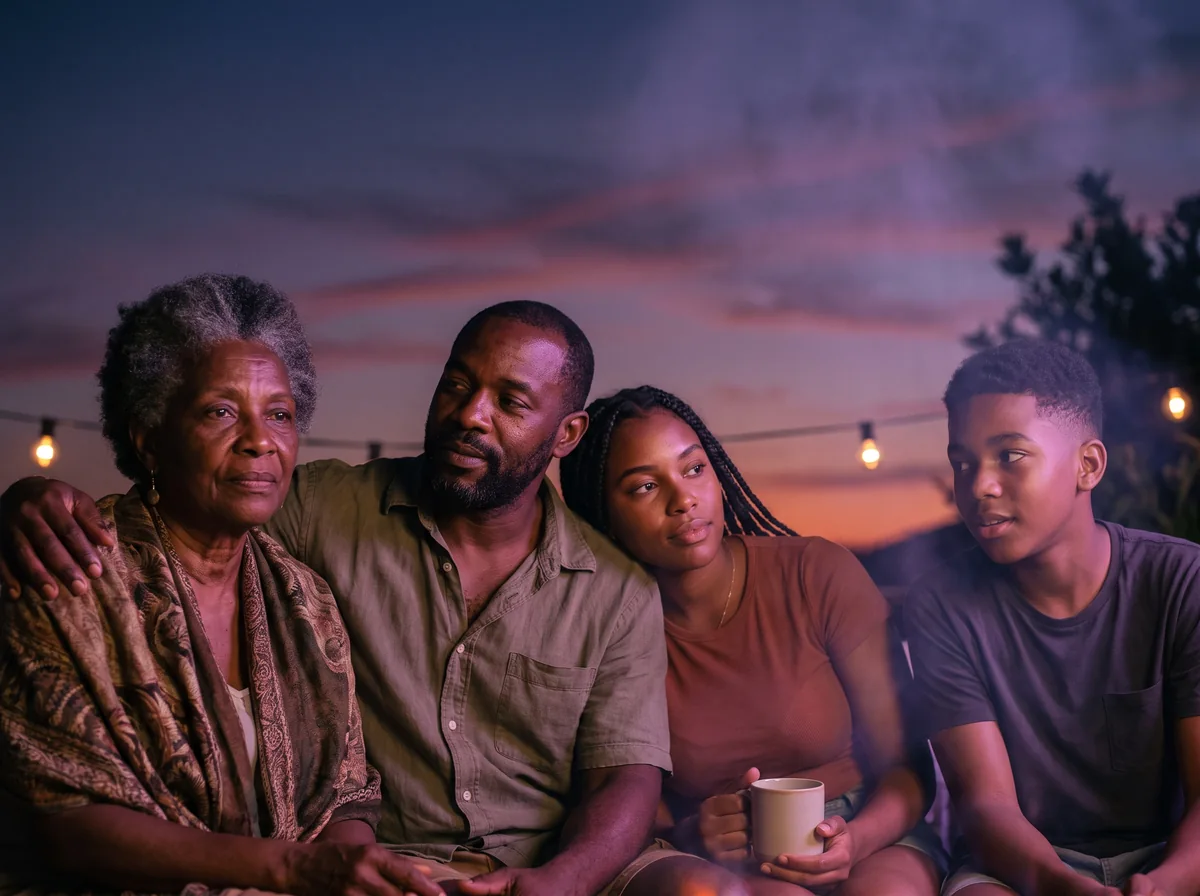
Roots Voice Legacy. Our first workshop.
Our first programme: three workshops over three months for around twenty participants with Dutch Caribbean roots. Each person arrives with the names, photographs and stories their family has kept, and leaves with a personal artifact: a piece of their history made visible.
Who we are. An initiative of Ngrane.
Sin Miedu is an initiative of Ngrane, a design and technology studio in Amsterdam founded by Stephen Garcia and David van Delden, who was born and raised in Curaçao. Ngrane works on strategy, branding, digital products and film for clients in the Netherlands and the Caribbean.
Sin Miedu is where that work meets home. It is set up as an independent foundation with its own team: facilitators, coaches, designers and makers, most of them from the Dutch Caribbean diaspora.